
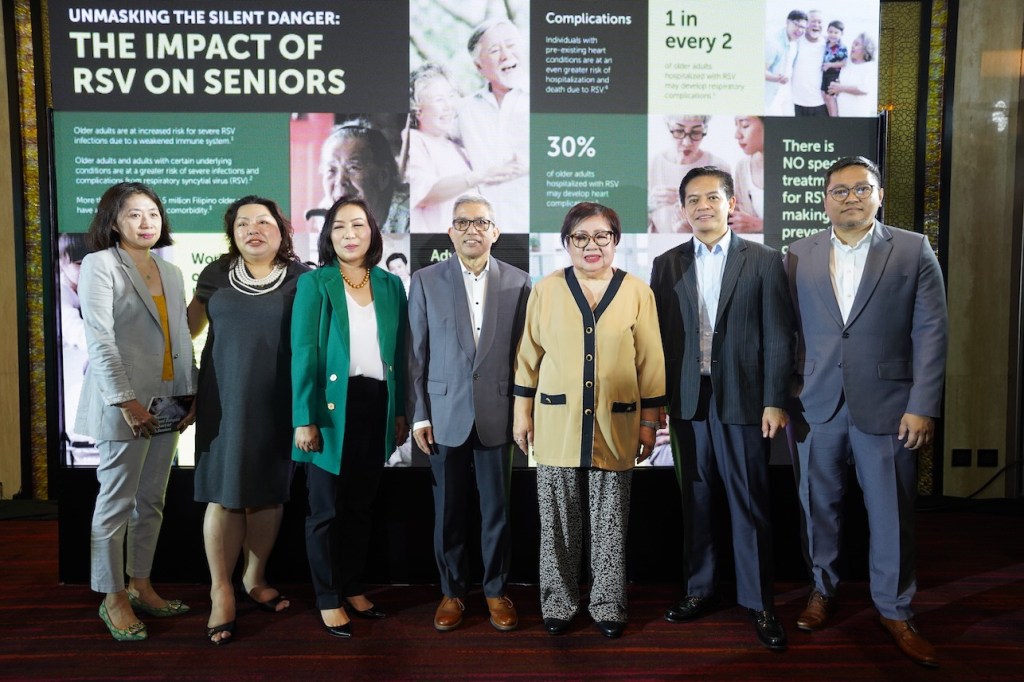
Respiratory syncytial virus (RSV) a common, contagious virus that usually causes mild symptoms. In older adults and adults with certain underlying conditions, RSV can cause severe infections1.
RSV symptoms can range from mild to severe, lasting up to 2 weeks. Older adults can have severe symptoms caused by RSV
In a fully susceptible population, each RSV-infected person affects three other people3 on average. Infected people are typically contagious for 3–8 days,1 although older adults may shed virus for longer periods of time.
RSV is a highly contagious seasonal virus that co-circulates with other respiratory viruses.
RSV season in the Philippines has been shown to occur in the rainy months from September to February, with the peak between October and December.2,3
RSV infection is often thought of as a pediatric illness, but is associated with substantial burden in adults
Being an older adult can put you at increased risk for severe infections from respiratory syncytial virus (RSV)1- 4
Rates of complications and severe outcomes are similar or worse in older adults with RSV than older adults with influenza1,2
Patients with underlying comorbidities are at higher risk of hospitalization when they get an RSV infection Diagnosis, Management and Prevention of RSV2
Diagnosis, Management and Prevention of RSV
Since July 2023, RSV vaccines have been approved in different markets References: DIAGNOSIS RSV symptoms is indistinguishable from other respiratory infections.7 RSV testing is not a routine.8-10
MANAGEMENT Currently, there is no specific treatment available for RSV in adults.12 The mainstay of therapy for acute infection is supportive care.12
RSV is a common contagious virus affecting the lungs and breathing passages. Adults can be at increased risk for RSV disease due to comorbidities, immune-compromised status, or advanced age.RSV can exacerbate conditions, including COPD, asthma, and chronic heart failure and can lead to severe outcomes, such as pneumonia, hospitalization, and death. Each year, approximately 177,000 adults 65 years older are hospitalized in the US due to RSV; an estimated 14,000 cases result in death.
 Virgie Cheng On The Go