
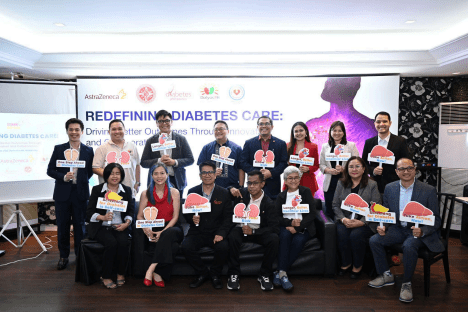
Coinciding with National Diabetes Awareness Week, health experts and advocacy groups gathered to address Type 2 Diabetes (T2D), the most common type of diabetes affecting 4.7 million Filipinos,1 and its severe complication, Chronic Kidney Disease (CKD), which impacts nearly half of T2D patients,2 aiming to debunk common misconceptions and encourage the public to seek early screening, intervention, and disease management strategies, highlighting how proactive action can give better health outcomes.
For too long, diabetes has been a silent battle for many Filipinos,” Dr. Bien Matawaran, chief of the Section of Endocrinology, Diabetes and Metabolism at the University of Santo Tomas Hospital, said. “Our goal today is not merely to dwell on the problems of this disease, but to forge a path forward, a path built on collaboration, stronger support systems, and a genuine understanding of what this condition truly is.”
Understanding Type 2 Diabetes
Type 2 Diabetes is a chronic condition where the body becomes resistant to insulin or doesn’t make enough insulin.3Insulin is a vital hormone that helps sugar, particularly glucose, from the food enter the cells to be used for energy. When this process doesn’t work efficiently, glucose builds up in the bloodstream, leading to elevated blood sugar levels. Left unmanaged, this can lead to several complications, such as Chronic Kidney Disease, where around 40% of T2D patients develop during their lifetime.2
In essence, Type 2 Diabetes is a condition where our body’s cells struggle to effectively use glucose from our food, or our body doesn’t produce enough insulin to manage it,” Dr. Lora May Tin-Hay, president of the Philippine College of Endocrinology, Diabetes and Metabolism (PCEDM), said. “It’s not just about what we eat; it’s a true lifestyle disease influenced by multiple factors.
Dr. Tin-Hay added that the amount of food consumed,level of physical activity, and genetic history all play significant roles in determining the risk a person has for developing T2D and CKD.
“But the good news remains the same: with early detection and proper, comprehensive management that addresses these factors, we can work to prevent complications,” she said.
Filipino T2D Burden
According to the 2024 data from the International Diabetes Federation (IDF), approximately 7.5% or an estimated 4.7 million Filipinos aged 20-79 years old are living with the disease.1 The same statistics also show that an estimated 53.5% of adults in the country remain undiagnosed, highlighting the need for early screening on T2D.1
In the 2023 National Nutrition Survey of the Department of Science and Technology’s Food and Nutrition Research Institute, it revealed that two out of every ten Filipino adults aged 20 to 59 years are prediabetic,4indicating a large population is at high risk of progressing to Type 2 Diabetes if not addressed immediately.
The Philippine Statistics Authority also reported that diabetes was the fifth leading cause of mortality among Filipinos from January to November 2024, emphasizing its severe impact on national health.5
Prevention and Management

science-based care to help prevent the progression of Type 2 Diabetes and Chronic Kidney Disease during the panel discussion on advancing diabetes care in the Philippines.
“The greatest challenge is bridging the final gap: the gap between knowledge and action,” Dr. Nines Bautista of Diabetes Philippines said. “The health care professional’s role is to be a translator—to distill complex clinical data into a simple reason why a patient should take a new pill. True innovation happens when a patient leaves our clinics with a clear, manageable plan they feel empowered to follow.”
T2D patients are also advised to take CKD screenings that can significantly slow or even halt the progression of kidney damage, and avoid dialysis and transplant.
“The goal should be to make dialysis a last resort, not an inevitability,” Reynaldo Abacan, president of CKD support group Dialysis PH said. “If we can use technology and early intervention to introduce therapies that can significantly slow down the progression of the disease, we can change the outcome.”
“True prevention is multi-layered,” Dr. Lora May Tin-Hay, president of the Philippine College of Endocrinology, Diabetes and Metabolism (PCEDM), explained. “It starts with early prevention—starting with having healthy lifestyles to prevent chronic conditions like obesity, hypertension, and diabetes from ever developing.
Dr. Tin-Hay added that for those already diagnosed, the focus shifts to effectively managing their condition and preventing it from leading to kidney failure.
“Each of these steps is a smarter investment in our future. It is far more cost-effective to support wellness and early management than it is to pay for dialysis sessions later on.” she said.
Time to Speak Up
A diabetes patient advocate leader shared that the challenges of those living with T2D sometimes aren’t medical, which leaves some patients feeling isolated and overwhelmed.
The biggest barrier is, without a doubt, a combination of financial toxicity and a lack of practical education,” Arch. Cynthia Clemen Y. Duntz, president of the Diabetes Advocacy Society Inc. “Patients are often overwhelmed. They don’t know how to navigate the system. It’s a journey, and they often feel they are walking it alone.”
For their part, PhilHealth affirmed its commitment to boosting comprehensive healthcare for Filipinos with T2D by emphasizing its continuous improvements in its services.
“PhilHealth is continuously working to enhance the support we provide to patients,” Dr. Lydia Ann Labro, representative for PhilHealth, said. “Our goal is to ensure that comprehensive health services are not just available, but truly accessible, such as our newly announced Yaman sa Kalusugan Program (YAKAP), an initiative which expands the list of essential medicines and services, which will benefit millions of Filipino patients.”
Dr. Labro added that they are also strengthening their partnerships with healthcare professionals, from rural health units to specialized hospitals, to improve the quality and integration of care across the country, making it easier for members to access benefits.
“This is a welcome and truly significant development for patients with CKD who are also affected by Diabetes,” Reynaldo Abacan, president of Dialysis PH, said. “Having improved access to innovative treatments through PhilHealth’s newly announced YAKAP, is a clear signal to patients that their concerns are being heard by the government.”
There is Hope
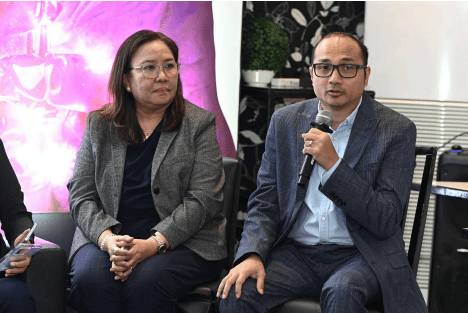
Our ambition is to improve and save the lives of people living with the complexities of renal and metabolic diseases.” Dr. Cyril Tolosa, director for Medical Affairs at AstraZeneca Philippines, said. “We are committed to advancing science-based diabetes care in the Philippines, with a strong focus on early diagnosis and timely intervention, allowing patients to better manage their condition, reduce health risks, and prevent long-term complications.”
“Which is why we are strongly committed to working with healthcare professionals, medical societies, patients, government agencies, and policy makers to improve access to healthcare and remove barriers to diagnosis and treatment,” Dr. Tolosa added.
These efforts are realized through innovative collaborations such as Beyond Sugar with PCEDM, which aims to go beyond glucose control and identify complication risks for T2D patients via a nationwide registry involving PCEDM’s training institutions. Additionally, ACT NOW for CKD, a partnership with Diabetes Philippines and local government units, actively screens T2D patients for CKD risk.
The path forward is clear: through shared knowledge, early screening, and advocacy for accessible care, we can fundamentally change the trajectory of Type 2 Diabetes (T2D) in the Philippines. By fostering effective and meaningful collaborations, we can build a future where timely intervention and comprehensive disease management are the norm, ensuring Filipinos live healthier lives and overcome the challenges posed by T2D and its complications.
With the government reinforcing its commitment to accessible and preventive healthcare in the recent SONA, and the expansion of innovative medicines andpreventive health services, more Filipinos now have opportunities to take charge of their health.
 Virgie Cheng On The Go